
Rabbi Benayahu Shmueli, Head of the Yeshiva: Chizuk for the 18th of Elul
The word Shofar serves as an acronym for Pote'ach She'arim U'Boke'a Rekie'im ("Opens gates and splits open the heavens"). The blasts of the shofar possess immense power because they awaken repentance within human hearts. Additionally, the shofar acts as a royal trumpet, blown during the coronation of a King. The Vilna Gaon experienced immense joy whenever he heard the shofar, explaining that the core aspect of the day is crowning the Holy One, blessed be He, as King over all worlds.
The following is based on Rabbi Benayahu Shmueli's 18th of Elul, 5786 Hebrew Chizuk video.
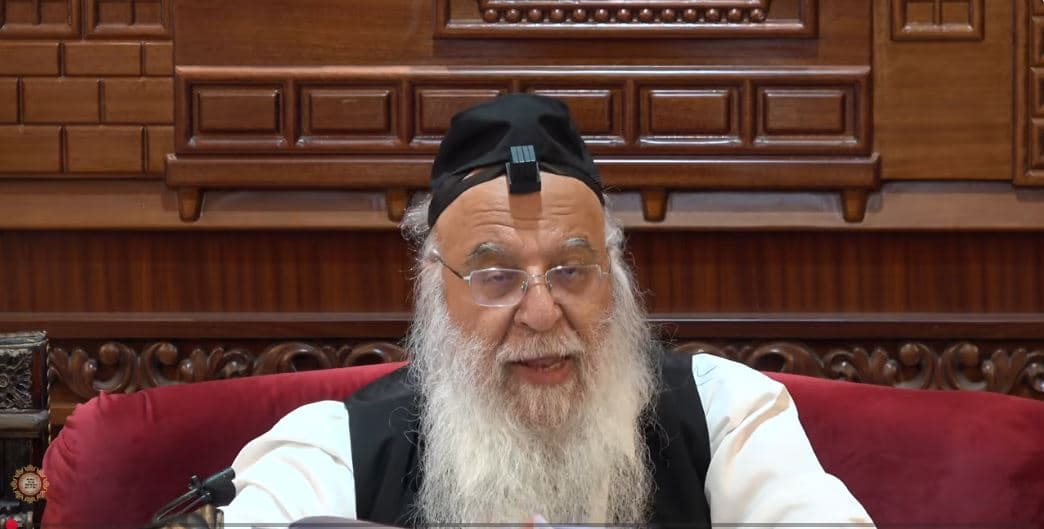
Preparation for Rosh Hashanah
Opening Greetings & Yahrzeit Commemorations
Good morning to everyone. Today is Monday, the second day towards the Holy Shabbat, the 18th of Elul, 5786.
Today marks the yahrzeit (anniversary of the passing) of the Maharal of Prague, the holy Gaon, Rabbi Yehuda Loew, son of Rabbi Bezalel—may his merit protect us, Amen. The acronym "Maharal" stands for Morenu HaRav Loew ("Our Great Teacher, Rabbi Loew"). He was a tremendous genius with no equal in the world, renowned for saving the Jewish people from false blood libels through the creation of the Golem.
Today is also the yahrzeit of our master and teacher, Rabbi Abdallah Somekh, the greatest of the rabbis of Babylon and a descendant of Rabbi Nissim Gaon, who composed the holy Yom Kippur confession (Viddui). Rabbi Abdallah Somekh was exceptionally humble and constantly fled from honor. Though people eagerly pursued him, he distanced himself from authority. Everyone referred to him as "Ustadh," which means "My Master and Teacher." He was a merchant who devoted his entire life to Torah study and authored the work Zivchei Tzedek. He was also the primary teacher of the Ben Ish Chai (Rabbi Yosef Chaim).
Despite his stature, Rabbi Abdallah Somekh would attend the sermons of Rabbi Yosef Chaim and stand at full height out of respect when Rabbi Yosef Chaim entered the room, filling the Great Synagogue with awe. Rabbi Yehoshua Moshe writes in his book Ketz HaYamin that whenever Rabbi Abdallah Somekh and Rabbi Yosef Chaim walked through the marketplace together, profound awe fell upon everyone, including non-Jews.
Upon his initial passing, he was buried in the courtyard of the tomb of Yehoshua the High Priest, a site held sacred by the local Muslims. Because of severe complications, his body had to be exhumed later to be moved. When they opened the grave, bringing tools and spices, they found his body completely intact, exactly as it was laid to rest on the first day—an absolute wonder.
The Power of the Shofar & The Walls of Jericho
We are currently in the midst of major preparations leading up to the great and awesome Day of Judgment, when the Almighty establishes judgment over the earth. Through the sound of the Shofar, all the heavenly gates are opened.
The word Shofar serves as an acronym for Pote'ach She'arim U'Boke'a Rekie'im ("Opens gates and splits open the heavens"). The blasts of the shofar possess immense power because they awaken repentance within human hearts. Additionally, the shofar acts as a royal trumpet, blown during the coronation of a King. The Vilna Gaon experienced immense joy whenever he heard the shofar, explaining that the core aspect of the day is crowning the Holy One, blessed be He, as King over all worlds.
The word Shofar (שופר) also forms the initial letters of the verse Az yimaleh Sechok Pinu V'leshonenu Rinah ("Then our mouth was filled with laughter, and our tongue with singing"). Furthermore, regarding the verse in psalms: Cause us to rejoice according to the days that You afflicted us, the word Anitanu ("You afflicted us") shares the exact numerical value (Gematria) of Shofar.
The shofar breaks down all barriers separating us from our Father in Heaven. When the Israelites entered the Land of Canaan, they could not breach the fortified walls of Jericho. Following Hashem's command, they encircled the city for seven days with shofars and trumpets. The wall did not fall sideways—which would have left an obstacle of equal height and width—but instead sank straight into the ground, where its remains remain submerged to this day. This miracle was accomplished purely through the blowing of the shofars.
Salty Tears and the Parable of the Three Pranksters
Consider a city situated by the sea, where massive waves periodically crashed through and washed away half the town. The king spent vast sums to construct a massive dam made of heavy, reinforced timbers. Over time, however, the dam failed. When the king demanded to know why, the builders explained that the saltwater had slowly penetrated and dissolved the wood until the wall collapsed.
Similarly, our tears are salty. The moment a person weeps sincere tears in prayer, those tears dissolve and breach the walls standing between us and Hashem. The gates of tears are never locked.
The primary obstacle to repentance is the Evil Inclination (Yetzer Hara), which uses endless tricks to distract a person and prevent him from repenting.
The Parable of the Poor Yemenite and the Three Pranksters
A poor Yemenite man worked hard to save enough money to buy his wife a goat for her birthday so their family could have fresh milk. He tied the goat to the tail of his donkey and attached a bell to the goat's neck so he would hear if anyone tried to steal it.
Three pranksters saw him passing by and made a bet:
- The first claimed he could steal the goat unnoticed.
- The second claimed he could steal the donkey.
- The third claimed he could steal the man's very clothes.
The first prankster quietly unhooked the goat, tied the bell directly to the donkey's tail so it would keep ringing, and walked off with the goat.
Soon after, the second prankster approached the poor man and said, "Why do you have a bell tied to your donkey's tail? Bells belong on goats! Where is your goat?" The man turned around, panicked, and asked if anyone had seen it. The prankster pointed down a distant path, saying he saw a man running with a goat. As the Yemenite ran off to chase the thief, the second prankster stole his donkey.
Left with nothing, the Yemenite walked on until he came across the third prankster sitting by a deep well, crying bitterly. The Yemenite asked, "Why are you crying?" The prankster replied, "My wallet full of money fell into the spring!"
The Yemenite tried to comfort him: "Don't cry. Look at me—I lost my goat and my donkey today, yet I remain hopeful." The prankster responded, "If you climb down into the spring and retrieve my wallet, I will give you enough money to buy a new donkey, a new goat, and fresh supplies."
The poor man stripped off his clothes and climbed down into the water. Immediately, the third prankster grabbed the clothes and fled, leaving the man with absolutely nothing.
This represents the strategy of the Evil Inclination. It creates complete chaos, tricks a person, strips him of his good deeds, and schemes against him anew every single day. Therefore, one must wake up quickly and repent before problems arise.
The Chafetz Chaim's Sermon: The Suit and the Note
The Chafetz Chaim emphasized the supreme spiritual elevation of the shofar. In his community, it was customary during Rosh Hashanah to take a brief intermission between the Torah reading and the shofar blowing so the congregation could partake in a light Kiddush to sustain their strength. Following the break, the congregants would study Mussar (ethical literature) or recite Psalms while awaiting the Chafetz Chaim.
One year, upon entering the synagogue, the Chafetz Chaim noticed several young men chatting about foolish nonsense—debating local cantor changes—instead of preparing themselves for the awe of the Day of Judgment. Deeply pained, he stepped up to deliver a sermon:
He shared a story of a yeshiva student who spent six uninterrupted months immersed in study away from home. During that time, his mother fell ill and passed away. The rabbis struggled with how to break the news to him gently. They decided to present him with a gift—a beautiful new suit—and placed a note inside the pocket informing him of his mother's death. When the student received the suit, he found the note, read it, and broke down weeping. In that moment of tragedy, the fine suit held no value to him whatsoever.
The Chafetz Chaim then turned to the young men and said: "Today is Rosh Hashanah, the great and awesome Day of Judgment. We dress in fine clothes and partake in rich foods, meat, and sweet drinks. But today, a hidden note has been placed in everyone's pocket. None of us knows what is written in our divine verdict for the coming year. How can anyone waste this time fooling around? We must use these precious moments to repent!"
Spiritual Warfare and the Unity of Rosh Hashanah
Rabbi Shlomo HaKohen of Radomsk taught that Rosh Hashanah is a time of intense spiritual warfare in the Heavenly Realm. The forces of the Sitra Achra (the "Other Side"), Satan, and his legions rise up to accuse humanity on the Day of Judgment.
Our main defense against these spiritual accusations—alongside the blowing of the shofar—is unity, joy, and brotherhood. The verse states: "Shout joyfully (Hari'u) to Hashem, all the earth". The word Hari'u (הריעו) is root-related to Re'ut (friendship/brotherhood). When Jews stand united in love and friendship, the accusers cannot prevail against them. The absolute greatest protection on Rosh Hashanah is to avoid anger, refrain from speaking ill of anyone, and maintain pleasant speech with every person.
Historically, severe spiritual decrees have coincided with Rosh Hashanah falling on Shabbat—such as the rise of Hitler and the outbreak of the Crusades. The spiritual remedy for such periods is meticulous observance of Shabbat.
Rectification, Pidyon Nefesh, and the Final Shabbat
As we reach the final Shabbat of the year, we must make it as spiritually strong as possible. This Thursday (the 21st of Elul), we will undertake a day of fasting and perform a comprehensive Tikun Ovonot (rectification of sins). Those participating should accept the fast upon themselves on Wednesday, fasting on Thursday from dawn (Alot HaShachar) until the emergence of the stars (Tzeit HaKochavim), joining together at 12:00 PM for intense prayer and rectification.
Additionally, one should be diligent regarding Pidyon Nefesh (redemption of the soul). Rabbi Chaim Vital (the Maharchu) writes that whoever performs a Pidyon Nefesh on the eve of Rosh Hashanah according to the established order is guaranteed to complete his year.
When asked how some people still pass away even after doing a Pidyon Nefesh, the explanation is clear: every human being has a predetermined lifespan decreed by Hashem. No one escapes death when their allocated time arrives, regardless of connections or status. However, if negative spiritual accusations arise to cut a person's life short before his ordained time, the Pidyon Nefesh serves as a powerful shield to annul those early decrees and ensure he completes his full allotted years.
Therefore, one should perform this redemption not only for himself but for his entire family.
Preparing Through Torah Study
To prepare for the final Shabbat and the upcoming blowing of the shofar, one must dedicate maximum time to Torah study. Rabbi Ovadia Yosef used to quote the Mishnah: "He who acquires one commandment acquires one advocate (paraklit) for himself." The strongest defense attorney a person can construct for the Day of Judgment is the angel created through Torah study.
Studying Torah on Shabbat carries immense weight: every hour of study on Shabbat is equivalent to 1,000 hours during the week. During the holy month of Elul, the Ben Ish Chai writes that an hour of Shabbat Torah study is equivalent to 1,000 months of study! Studying the holy Zohar yields even greater spiritual light.
The principle states that "Everything follows the seal." This final Shabbat seals the spiritual record of the entire past year, while Shabbat Shuvah (following Rosh Hashanah) opens the new year. By strengthening our Torah study, unity, and shofar preparations during these dual portions of Nitzavim-Vayeilech, we secure divine mercy and a great salvation for the year ahead.