
Rabbi Benayahu Shmueli, Head of the Yeshiva: The Sanctity of Elul, the Days of Kindness, and the Legacy of the Chafetz Chaim and Chizuk for the 24th of Elul
Regarding spiritual struggles, the Chafetz Chaim taught that a person must never despair or delay spiritual growth by waiting for a more convenient time. Commenting on the verse, "The place on which you stand is holy ground," he explained that a person must not say, "Right now the struggle is too difficult; I will wait for a better time or higher spiritual state." The exact place and circumstance in which a person currently finds himself is the holy ground where he must serve Hashem and succeed.
The following is based on Rabbi Shmueli's Hebrew Chizuk video for the 24th of Elul, 5786
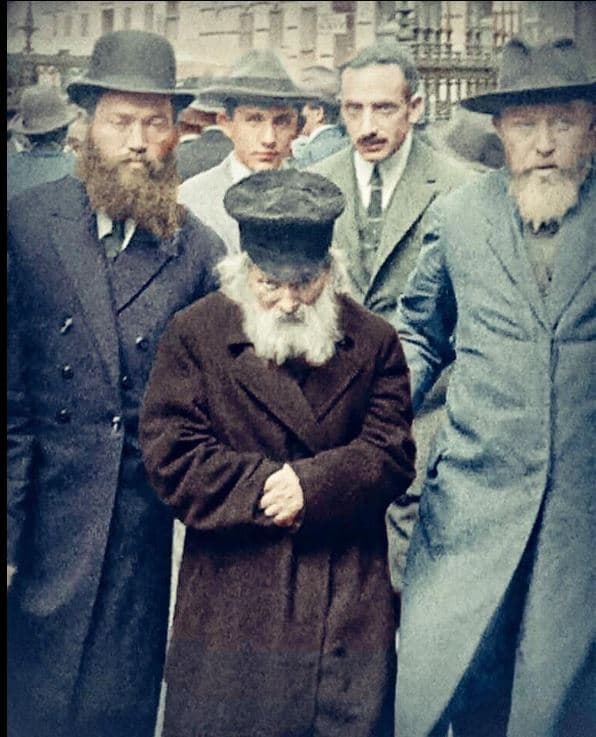
The Sanctity of Elul, the Days of Kindness, and the Legacy of the Chafetz Chaim
The Spiritual Significance of the 24th of Elul
On Sunday, the 24th of Elul, 5786, we enter the final week of the year heading toward the Holy Sabbath and Rosh Hashanah. This final week possesses the unique power to elevate the entire year as a whole.
As noted in the Kaf HaChaim by Rabbi Chaim Palagi and other works, there is a specific custom for the 24th of Elul: one should read the Torah portion detailing, "And these are the kings that reigned in the land of Edom before there reigned any king over the children of Israel." This reading connects to the primordial state when the Holy One, Blessed be He, was creating worlds and destroying them, a concept symbolized by those early kings. On the 25th of Elul, the creation of the world began. The 24th of Elul marks the transition of the final primordial king, leading into the emergence of the true King in His full glory and majesty.
On Rosh Hashanah, we recite in our prayers: "This day is the beginning of Your works." This phrase does not refer to the initial creation of the physical world, which occurred on the 25th of Elul. Rather, "the beginning of Your works" refers to the creation of Adam, the first man, who was created on Rosh Hashanah. Man is called the primary purpose of creation because all upper and lower realms were brought into being to serve humanity and to be guided by man's spiritual choices.
If man does not observe the Torah, creation cannot endure, as expressed in the verse: "If not for My covenant by day and night, I would have not appointed the ordinances of heaven and earth." The Vilna Gaon (HaGra) asks how the world managed to stand during the first five days of creation before man was formed on the sixth day to till the ground and sustain existence through Torah study. The Vilna Gaon explains that during those initial days, the Holy One, Blessed be He, sustained the universe purely through His immense light of Kindness (Chesed).
Just as the world was established back then through amplified divine Kindness, so too in these final days of Elul, a great light of Kindness is revealed in the world each year. Therefore, one must fully utilize these auspicious days.
Preparations and Customary Intentions
According to the Ben Ish Chai (Rabbi Yosef Chaim), special practices are prescribed for the transition into the 25th of Elul:
- Mikvah Immersions: Before twilight, a person should immerse in the ritual bath (Mikvah) with three specific intentions (Kavanot):
- The first immersion removes spiritual impurity (Tuma'ah).
- The second immersion rectifies the sin of anger.
- The third immersion prepares the individual to receive the five lights of Kindness (Chasadim): Chesed of Chesed, Chesed of Gevurah, Chesed of Tiferet, and so on, reflecting the great light illuminated in the world during these days.
- Evening Meal and Candle Lighting: After reciting the Evening Prayer (Arvit), one returns home to partake in a festive meal with his wife consisting of bread and meat. Together, they light five candles on the table to symbolize the five lights of Kindness.
- Daily Supplications: Starting on the 25th of Elul, specific daily prayers and scriptural readings authored and arranged by Rabbi Yosef Chaim are recited. Each day corresponds to its day of creation (e.g., reciting "And there was evening and there was morning, one day"), accompanied by dedicated supplications for that specific day.
Yahrtzeits of the Sages
The 24th of Elul marks the anniversary of the passing (Yahrtzeit) of several eminent Torah leaders:
- Rabbi Yisrael Meir HaKohen of Radin (the Chafetz Chaim), the world's foremost figure in Mussar (ethical discipline).
- Rabbi Yechezkel Abramsky, author of the comprehensive commentary Chazon Yechezkel.
- Rabbi Yosef Babad, author of the incisive analytical work Minchat Chinuch.
- Rabbi Ben-Zion Meir Hai Uziel, the Rishon LeZion (Sephardic Chief Rabbi of Israel).
As Rosh Hashanah approaches, remembering these righteous individuals inspires us to tip the scale of merit for ourselves and for the soldiers of Israel.
The Lifelong Piety and Accounting of the Chafetz Chaim
The Chafetz Chaim was renowned for never speaking gossip or slander (Lashon Hara) throughout his entire life. He authored foundational works for the Jewish nation, including:
- Mishna Berura, the definitive commentary on the Orach Chaim section of the Shulchan Aruch, studied across the entire world.
- Chafetz Chaim and Shmirat HaLashon, detailing the laws and ethics of proper speech.
- Comprehensive expositions on the order of Temple sacrifices (Kodashim), reasoning that since the Holy Temple could be rebuilt at any moment, the Jewish people must be fully versed in the laws of offerings.
Despite his monumental achievements, he conducted himself with extreme humility, moving among people like the simplest person.
Throughout the year, the Chafetz Chaim engaged in continuous spiritual self-accounting (Cheshbon Nefesh):
- Daily: He recited Nishmat Kol Chai every day to thank Hashem and joined his wife daily in expressing gratitude for all they had been given.
- Weekly and Monthly: He conducted regular reviews on the eve of every New Month (Erev Rosh Chodesh).
- Annually: At the end of the year, he reviewed his actions day by day through every month—Tishrei, Cheshvan, Kislev, and onward. It is told that in one particular year, he recalled his exact actions for every moment of the entire year, except for six unaccounted minutes, over which he engaged in intense repentance (Teshuva).
Anecdotes of Character and Sensitivity
Prayer Over the Mishna Berura
In the town of Radin, a non-Jewish estate owner was walking through his field around three or four o'clock in the morning when he heard intense weeping and shouting. Running toward the sound, he discovered a short man lying on the ground, weeping bitterly. It was the Chafetz Chaim. When asked what was wrong, the Chafetz Chaim explained that he was preparing to publish a Halachic work (Mishna Berura) and was pleading with Hashem that it contain no errors, lest people be led astray in Jewish law on his account. Years later, when meeting students of the Chafetz Chaim, the landowner recounted this story to illustrate their teacher's extraordinary fear of Heaven.
Protecting a Thief from Shame
While traveling by wagon to sell his published books in a distant town, the Chafetz Chaim stepped away briefly during a stop. The wagon driver fled into the town with the entire stock of books. Rather than calling for his punishment or causing a scene, the Chafetz Chaim walked the rest of the way on foot until he reached the town tired and exhausted. He located the driver, paid him his full fee for the journey, and hired a second wagon to travel to a completely different town to sell the books. When asked why he did not sell his books there, he explained that if he sold them in that town, the driver would realize who he was and feel public shame for having tricked him. To spare the man from embarrassment, he chose to travel elsewhere.
Compassion for the Sick
The Chafetz Chaim repeatedly refused high-profile rabbinical positions to dedicate his time to writing and organizing spiritual works. His daughter, who lived on Tzephaniah Street and was married to Rabbi Zacks (the head of the Hebron Yeshiva), recalled her father's extraordinary love for his fellow Jew (Ahavat Yisrael). Once, a gravely ill man came to her father seeking a blessing. Feeling he lacked the spiritual strength at that moment, the Chafetz Chaim went into the forest, drew a circle on the ground, stepped inside, and prayed: "Master of the Universe, I am not leaving this spot until this person recovers." On another occasion, he took upon himself twenty years of personal fasts so that a critically ill individual would recover.
The Preciousness of Time and Spiritual Focus
To illustrate the value of time, the Chafetz Chaim cited the Talmudic principle: "Who is a fool? One who loses what is given to him." He offered the following parable:
A very wealthy man had an only son who fell gravely ill. After all medical efforts failed, doctors informed the father that the boy's only chance of survival was a complete blood transfusion swapped with another child of the same age. The doctor suggested offering a massive fortune to a poor family in exchange for one of their children's lives. Naturally, no parent would agree to sacrifice their child's life for money.
The Chafetz Chaim observed: How foolish are we when we discard not our child's life, but our own! Every wasted minute or hour is a piece cut directly from a person's living existence.
The Chafetz Chaim embodied the verse written of Avraham: "And Avraham was old, coming along with his days"—meaning every single day and moment was fully utilized.
- He wore slip-on shoes without laces, explaining that tying shoe laces wasted a minute every day, which accumulated over a lifetime into many lost hours of Torah study.
- A rabbi once observed the Chafetz Chaim returning home from an exhausting journey alongside his son-in-law. Before the son-in-law had even finished untying his scarf, the Chafetz Chaim was already seated at the table with an open Talmud, deeply absorbed in study.
Regarding spiritual struggles, the Chafetz Chaim taught that a person must never despair or delay spiritual growth by waiting for a more convenient time. Commenting on the verse, "The place on which you stand is holy ground," he explained that a person must not say, "Right now the struggle is too difficult; I will wait for a better time or higher spiritual state." The exact place and circumstance in which a person currently finds himself is the holy ground where he must serve Hashem and succeed.
Faith, Prayer, and Serving Hashem in Times of Trial
A rabbi once visited the Chafetz Chaim and lamented the dire spiritual state of his town, noting widespread secularization, empty Mikvahs, closed Torah schools (Talmud Torah), and a butcher who ignored Halachic authority. When the rabbi repeatedly asked, "What can I do?", the Chafetz Chaim stood up and roared: "What do you mean, 'What can I do?' Faint! Cry out! That, you can do!" He explained that genuine crying out to Hashem brings divine salvation, just as the children of Israel groaned and cried out from their labor in Egypt, causing their prayers to ascend.
Regarding the quality of Mitzvot performed in difficult times, the Chafetz Chaim addressed the Zohar's statement that any commandment performed without proper awe and love (b'dechilu u'rchimu) does not ascend to Heaven. When asked how modern generations could endure given their spiritual shortcomings, he offered a parable:
A baker once complained that while his bread was of excellent quality, its misshapen appearance made it hard to sell. Years later, during a war, the baker reported that all his bread was selling rapidly regardless of shape. In times of war, people do not care about the aesthetic shape of the loaf; they need good bread to survive.
The Chafetz Chaim explained that our generation is engaged in an intense spiritual war against the Evil Inclination. Because we are in the midst of a battle, Hashem does not scrutinize the exact aesthetic perfection or emotional loftiness of our Mitzvot. Even if performed without ideal fear and love, the core performance of the Mitzvah is precious and ascends directly to Heaven.
He offered another parable during a synagogue reading of Parashat Ki Tavo, when he noticed congregants fleeing outside out of fear of the curses (Tochecha) written in the Torah:
A man who was terrified of walking through a forest filled with wild beasts was promised a cure by his wife. On the morning of his journey, she placed a thick black blindfold over his eyes, telling him that since he could no longer see the beasts, he would not be afraid. The husband replied: "But they can still see me! That is the problem!"
Ignoring reality or running away does not eliminate danger; true protection comes through prayer, Torah, and turning to Hashem before setting out on one's path.
The Heavenly Stature of the Chafetz Chaim and Final Lessons
An incident occurred in Radin involving a girl possessed by a Dybbuk (a distressing spirit). Students of the Chafetz Chaim gathered in holiness to perform an exorcism under their teacher's guidance. Before the spirit was expelled, the rabbis asked if it recognized the stature of the Chafetz Chaim. The spirit replied: "In Heaven, he is considered like a minor Tanna (Mishnaic Sage)."
With all his public leadership and righteousness, Heaven esteemed him primarily for his absolute devotion to Torah study. His son-in-law, Rabbi Zaks, noted that the Chafetz Chaim had prayed to Hashem that his spiritual greatness remain hidden from the world—and in his profound humility, he never even realized that he was a Tzaddik (righteous person).
The Rosh Yeshiva of Slobodka noted a testimony from the Chafetz Chaim's grandson regarding his motivation for writing on the Order of Kodashim and authoring the Bi'ur Halacha. The Chafetz Chaim authored these complex works to establish his standing as an accomplished scholar (lamdan), ensuring that people would not dismiss or disrespect his ethical works, such as Shmirat HaLashon.
The Chafetz Chaim attributed all his divine assistance (Siyata DiShmaya) to his mother. Every single day, she completed the entire Book of Psalms (Tehillim), weeping so copiously over her prayer book that its pages were soaked with tears, praying that the child she bore would grow up to be a true Torah scholar (talmid chacham).
In order to be acquitted in Heavenly judgment and to have Heaven view us favorably, a person must strictly judge his fellow man favorably (ledun lechaf zchut). By constantly judging others with merit, we pray to merit Hashem's mercy, health, and a favorable judgment.