
Rabbi Benayahu Shmueli, Head of the Yeshiva: Chizuk for the 30th of Tishrei - The First Day of Rosh Chodesh
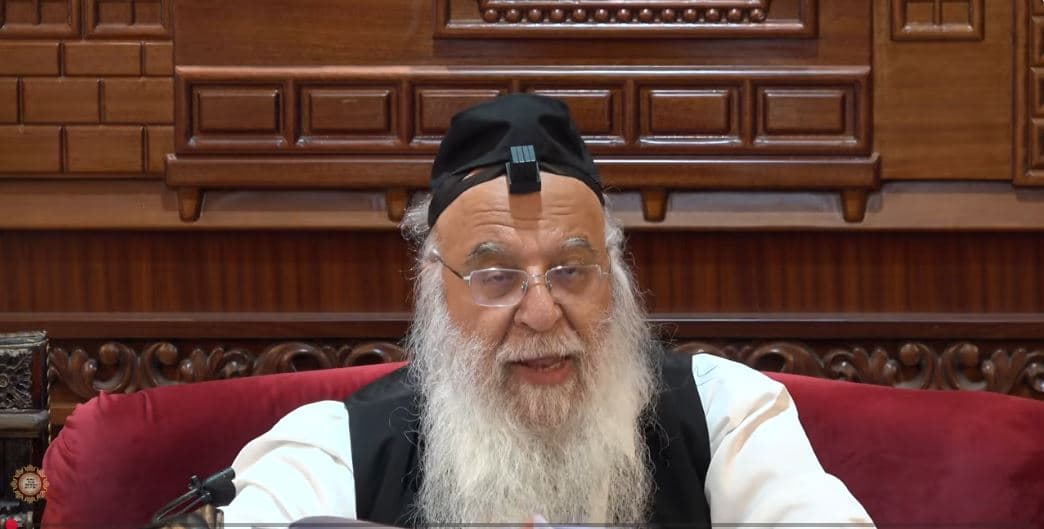
The following is based on Rabbi Shmueli's Hebrew Chizuk video for the first day of Rosh Chodesh MarCheshvan 5787
The Spiritual Journey from Creation to Shabbat: A Discourse on Parshat Bereishit and Noah
Introduction and the Light of Shabbat Bereishit
Following the conclusion of the holy days, we merit the unique light of Shabbat Bereishit and the uplifting energy of Rabbi Shimon bar Yochai (Rashbi). As Rav Shach noted, the Chafetz Chaim had the custom every day before Shacharit to say Parshat Bereishit up to "Vayechulu" to anchor foundational faith. In the absence of a physical Torah scroll to dance with, one dances with the Book of Genesis. This great light of Shabbat Bereishit serves as the luminary for the entire year, just as Rashbi illuminates the entire world.
The acronym for Bereishit reveals deep secrets: Bereishit corresponds to the light of the Torah of Rabbi Shimon bar Yochai (Ohr Torah shel Rabbi Shimon bar Yochai). As Rabbeinu the Arizal explains in Likutei Torah, creation begins with the letter Bet because the upper worlds were formed with the letter Aleph, while descending worlds begin with Bet. The Gaon of Vilna teaches that the entire Torah is contained within Genesis, Genesis is included in Parshat Bereishit, Parshat Bereishit is encapsulated in the word Bereishit, and that word is contained within the initial letter Bet.
Souls, Letters, and the Mystery of "Niflaot"
The Torah contains 600,000 letters, corresponding directly to the 60 myriads (600,000) of souls in the nation of Israel. Rabbi Sholom Hakohen of Radomsk expounded on the verse "Open my eyes that I may see wondrous things (niflaot) from Your Torah" (Psalm 119:18), noting that niflaot can be split into niflah ot—meaning "a letter fell from Your Torah". When a soul stumbles or drifts, an individual letter/soul metaphorically falls, requiring spiritual rescue. Furthermore, the word Bereishit forms an acronym representing the Divine Presence speaking: Biti (my daughter), Reshityi (my beginning), Shechinati (my Divine presence), Yonati (my dove), and Tamati (my innocent one).
The Merit of Studying Rashi
Beginning the cycle with Rashi is of utmost importance. The Belzer Rebbe, the Sar Shalom, taught that whoever studies Rashi well will be met by Rashi himself after 120 years, with Rashi dismissing any heavenly prosecutors or accusers.
The Gemara says a person should always complete his Torah portions [Parshiot] with the community, two time reading the scripture [Mikra] and one time Targum. Maran writes that those that fear heaven fulfills the obligation with both of them. Maran means both Rashi and Targum and Rashi should be read (in addition to the 2 Torah portions).
Whoever now started (the new cycle on Parsahat Hashavua), the Chafetz Chaim also used to finish the Zohar on the Parsha every Shabbat. Why shouldn't we do it properly?
Adam, Mount Moriah, and the Correction of Materialism
When the Holy One, blessed be He, banished Adam from the Garden of Eden, He sent him to till the ground from which he was taken. According to Rabbi Yonatan ben Uziel, this ground was Mount Moriah—the very place where Adam, Cain and Abel, Noah, Avraham (at the Binding of Yitzchak), and later King David and Solomon built the altar.
- The Place of Atonement: Man was created from the very dust of his future atonement at the altar.
- Purifying the Body: Tilling the ground served to purify Adam's body and remove the spiritual contamination and material obsession left behind by the serpent after eating from the Tree of Knowledge.
In contrast, Cain spent 1,656 years building cities and chasing worldly wealth without achieving true repentance, ultimately losing everything in the flood. Current global events—such as severe storms, hurricanes in Florida, earthquakes in Panama, and regional conflicts—remind humanity of the fragility of physical empires compared to spiritual eternity.
Transitioning to Parshat Noah: The Ark of Our Generation
As we move swiftly into Parshat Noah, we are reminded of the spiritual floods of lust, trouble, and suffering in our generation.
- The Ark of Protection: Just as Noah's ark saved him physically, the study of the Holy Zohar serves as the modern ark (Teivat Noah) to rescue us from contemporary spiritual currents.
- The Qualities of Noah: Noah is described as righteous, faultless, and gentle in his speech, conduct, and deeds. His name embodies spiritual balance: the point of midnight (Nekudot Chatzot) combined with the strength of sunrise (Neitz Chamah).
The three sons of Noah—Shem, Cham (Ham), and Yefet (Japheth)—represent foundational spiritual traits:
- Shem: Purity of intention (le-Shem), performing acts entirely for the sake of heaven to elevate the Divine Presence (Shechinah) from the dust.
- Cham: Warmth and enthusiasm in the service of G-d, avoiding spiritual coldness or stagnation.
- Yefet: Beauty and dignity, expressed through meticulous care in Mitzvot—such as acquiring the finest tallit, tefillin, and beautiful religious articles.
The Shield of Shabbat
Keeping Shabbat properly shields a person from three great historical trials: the subjugation of kingdoms (represented by Shem), the birth pangs of the Messiah (represented by Cham), and the war of Gog and Magog (represented by Yefet who was the father of Magog).
May we merit taking the inspiration of the festive seasons and Parshat Bereishit into our daily lives, walking steadfastly in the path of Hashem with joy, purity, and dedication.