Yeshivat Nahar Shalom

A historic Kabbalistic yeshiva in the heart of Jerusalem, dedicated to Torah study, spiritual growth, and community support.

Quick Links

  • About Us
  • Our Causes
  • Donate
  • Hebrew site
  • Shop

Contact

Yeshivat Nahar Shalom

6 Shilo Street (corner of Agrippas Street)

Jerusalem, Israel

For mail:

P.O. Box 1884

Jerusalem 9102701, Israel

02-622-2560 / 02-622-3001

Fax: 153-775001874

m6222560@gmail.com

Sun–Thu, 9:00 AM – 7:00 PM

© 2026 Yeshivat Nahar Shalom. All rights reserved.

Donations from the United States are received by Friends of Nahar Shalom Inc., a registered 501(c)(3) nonprofit organization (EIN 27-2007035), which supports Yeshivat Nahar Shalom in Jerusalem. All donations are tax-deductible to the extent permitted by law.

All ClassesDaily Mishnah
All LeafletsThe Weekly Treasure
All ArticlesMoadey IsraelSegulotEssaysWhat's NewThe Weekly Parasha
General DonationDedicate a Day of Torah LearningTikkun NiftarimHachzakat AvrechPidyon Nefesh
Contact the YeshivaAsk Our RabbanimRequest a Bracha
Donate
Yeshivat Nahar ShalomJerusalem
  • Donate
Pidyon Nefesh - A personal Pidyon Nefesh, for you and your loved ones, whenever you need it
Dedicate a Day of Torah Learning - Dedicate 24 hours of Torah learning at Yeshivat Nahar Shalom for blessing, healing, or success, or in loving memory of a loved one.

Currently Viewing

More in The Weekly Parasha

  • Rabbi Benayahu Shmueli, Head of the Yeshiva - Chizuk for the 7th of Nissan

  • Rabbi Benayahu Shmueli, Head of the Yeshiva: Chizuk for the 4th of Cheshvan

    It is written in the holy Zohar that when Noah emerged from the ark, he saw the world in total desolation. He began weeping and praying to the Holy One, blessed be He, saying: "Master of the Universe, why did You do so?" The Holy One, blessed be He, said to him: "A foolish shepherd! Why did you not pray beforehand? Only now you pray? How long did I speak with you! You did not ask of Me even once that I should be patient—not even once! If you had prayed even once, everything would have ended well."

  • Explanation of the Haftarah of Parshat Noah

  • To Be Saved From The Flood In This Generation

    Rabbi Shimon bar Yochai says, "I have made for you an ark like Noah's ark, to save the final generation from the flood of problems that will exist then, both spiritually and materially—troubles, suffering, illness, problems."

  • One Should Continually Remember the Generation of the Flood

    It says, in every single generation there are certain sparks of them. In all generations they come—whether those from the generation of the Flood or those who create problems and troubles, they exist in every generation. They rise up against us.

  • Rabbi Benayahu Shmueli, Head of the Yeshiva: Chizuk for the 2nd of Cheshvan

    The Sages teach that theft is the very first transgression investigated when a person is judged ("Did you deal faithfully?"). Performing charity with stolen money accomplishes nothing. Rabbi Abraham, son of the Rambam, noted that even ten years of fasting cannot easily offset a single act of theft. During the Ne'ilah prayer, we plead, "So that we may cease from the financial oppression of our hands," because no iniquity hinders prayer from ascending quite like theft. Rabbi Aharon Kotler similarly warned that yeshivot can face troubles when their funding is not entirely pure, noting that non-kosher money leads to misfortune.

  • Rabbi Benayahu Shmueli, Head of the Yeshiva: Chizuk for the 1st of Cheshvan - The Second Day of Rosh Chodesh

    Where does 300 come from? 300 cubits is the (Gematria value of) Shin of the Serpent, make 300 cubits the length of the ark. 50 cubits its width is the (Gematria value of) Nun of the Serpent. What is left? A good part. We said in the Serpent the evil part is Chet, the good part is Nun and Shin; the Shin is 300 cubits length of the ark, the Nun is 50 cubits width. What (good) is left from the S"M angel? Aleph, Lamed. Lamed (Gematria value of 30) is 30 cubits its height, and the Aleph (Gematria value of 1) is "and finish it to a cubit upward". And then thus will be saved whoever needs to be saved, enter inside—and be saved.

  • Rabbi Benayahu Shmueli, Head of the Yeshiva: Chizuk for the 30th of Tishrei - The First Day of Rosh Chodesh

  • Rabbi Benayahu Shmueli, Head of the Yeshiva: Chizuk for the 27th of Tishrei

    When Eve was questioned, she said, "The serpent deceived me [Hishiani], and I ate." In the writings of the Ben Ish Chai, it is explained that Hishiani hints at a spiritual blemish inflicted upon two Divine Names: Adnut (Aleph-Dalet-Nun-Yud) and Sh-addai (Shin-Dalet-Yud). By removing the letter Dalet from both Names, what remains from Adnut is Ani ("I/me"), and the remaining letters rearrange to form Hishiani (or Shai Ani, "a gift to me").

  • An Explanation of the Haftarah "Tomorrow is the New Moon"

    Yehonatan went out with his attendant to the field on the third day, shot the arrows, and as agreed between them said to his attendant, "Behold, the arrow is far from you, run to fetch it." David, hearing this, understood that Shaul wanted to put him to death, and remained in his hiding place until Yehonatan sent his attendant back to the city. Then he came out from his hiding place, and they wept, each one upon the shoulder of the other; Yehonatan sent him in peace and reminded him that the oath they both swore shall rest upon them and upon their seed forever.

  • To Influence In All The Worlds

    Rabbi Shimon bar Yochai says: What did we achieve through this? He says: Man rules over all of creation. He has a part in the entire world of Assiah, in the entire world of Yetzirah, in the entire world of Beriah, in all worlds, in all Sefirot, in each and every place, in every single world man is connected to it.

  • The Holy One Blessed Be He, Gave Us The Land

    So that if the nations of the world come and say that the land belongs to them, asking how we took it from the Hittites, Amorites, Canaanites, Perizzites, Jebusites, and Girgashites—taking their land from them— he answers: No, everything belongs to the Holy One, blessed be He. The Holy One, blessed be He, created heaven and earth, created the entire world. At His will He gave it to them, and at His will He took it from them and gave it to us.

  • Introduction To The Chumash of Bereishit (Book Of Genesis)

    And we have learned from here that you should not say that the Torah created the world, but rather the Holy One, blessed be He, through His looking into the Torah created the world, and it turns out that the Holy One, blessed be He, is Himself the artisan, and the Torah was before Him corresponding to Him as an artisan as well (for the Holy One, blessed be He, depicted in the Torah the entire reality)

  • Shabbat Breishit Has An Influence Over The Entire Year

    Shabbat Bereshit is the root of all the days of the year. What does this mean? How a person conducts themselves during it, in this coming Shabbat, so they will conduct themselves the entire year. Why? Because you know, it is written: "Six days shall work be done" — work gets done by itself. How? The Shabbat is the source of blessing. When a person keeps a good Shabbat, all six of their days are blessed in the merit of Shabbat.

  • An Explanation of the Haftarah for Shabbat Shuva

    This Haftarah is read on the Shabbat between Rosh Hashanah and Yom Kippur, because it speaks of repentance, and this is relevant to the day, as it is the time of repentance.

  • Stories for Rosh Hashana by the Gaon, Rosh HaKollel Rabbi Yosef Shmueli - based on the words of the Head of the Yeshiva, Rabbi Benayahu Y. Shmueli

    Eight times King David cried out "my son," and with each time he cried out, he raised Avshalom to a higher level, until he brought him out of the seven levels of Gehenna (Hell) and brought him into the Garden of Eden. Rabbi Chaim Shmuelevitz prayed to Hashem at the Monument of Avshalom with these words: "Master of the Universe, how much did Avshalom sin against his father David, and how much did he pursue him? And what did David the King do? He mourned for him, prayed for him, and cried out: 'My son Avshalom, my son...' to bring him out from the seven levels of terrible Gehenom and bring him into the Garden of Eden.
  • An Explanation of the Haftarah Nitzavim

    Hashem will not keep silent and there will be no rest before Him, until He takes retribution on the nations that distressed Israel, and the salvation will be revealed before the eyes of all.

  • An Explanation of the Haftarah Ki Tavo

    From the greatness of the goodness and abundance that will be to Israel, behold the light of the sun and the moon will not be considered as anything, the nation of Israel will all be righteous and great, and Hashem will glory in them, the small tribe will grow a thousand times greater than what it is now, and Hashem will hasten the good things and the consolations with the coming of the redemption.

  • Explanation of the Haftarah of Parshat Ki Teitzei

    The prophet says to Zion, sing and rejoice because even though you were desolate, in the future the people of Israel will multiply greatly, and there will be more of them than all the nations that dwelt safely and were not exiled from their land. Therefore, expand all the cities around so that there will be room for your children, for you shall burst forth to the right and to the left.

  • The holy Zohar asks on the verse, “When you go out to war against your enemies”: Who are your enemies? The primary enemy of man is the evil inclination.

    When going out to war, you must understand military tactics: if you go head-to-head on the ground, there are heavy casualties on both sides. The best strategy is to go above the enemy from the skies. Spiritually, one must defeat the enemy’s ministering angel above before victory can happen below.

The Weekly Parasha

Stories for Rosh Hashana by the Gaon, Rosh HaKollel Rabbi Yosef Shmueli - based on the words of the Head of the Yeshiva, Rabbi Benayahu Y. Shmueli

By Yeshivat Nahar Shalom Staff•September 10, 2026
Rabbi Mordechai Dov overhears the soul-searching of the chafetz chaimbeinoniWhat Connects Rabbi Chaim Shmuelevitz to the Tomb of Avshalom?king david prays to bring Avshalom into Gan Eden

Eight times King David cried out "my son," and with each time he cried out, he raised Avshalom to a higher level, until he brought him out of the seven levels of Gehenna (Hell) and brought him into the Garden of Eden. Rabbi Chaim Shmuelevitz prayed to Hashem at the Monument of Avshalom with these words: "Master of the Universe, how much did Avshalom sin against his father David, and how much did he pursue him? And what did David the King do? He mourned for him, prayed for him, and cried out: 'My son Avshalom, my son...' to bring him out from the seven levels of terrible Gehenom and bring him into the Garden of Eden.

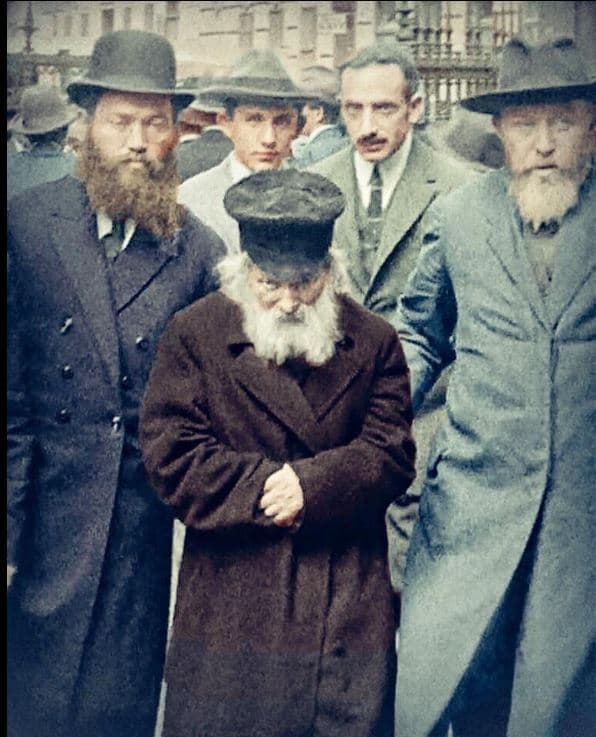
The Chafetz Chaim

The Chafetz Chaim's Soul-Searching Rabbi Mordechai Dov once observed the Chafetz Chaim retreating to the synagogue attic during the High Holy Days for solitary introspection. Standing outside, he overheard the Chafetz Chaim envisioning himself standing before the Heavenly Court, awaiting judgment while a herald calls for his merits to be announced.

In his meditation, the Chafetz Chaim pictured legions of holy angels appearing—created from his lifelong Torah study, religious observance, and the spiritual merit brought to the Jewish people through his published writings. The list of merits was so extensive that he was amazed by their magnitude.

However, he then imagined heralds calling forth prosecution for his shortcomings, such as moments where his performance of mitzvot or devotion lacked full perfection. As these accusations mounted, the Heavenly Court deemed his status as beinoni (average/intermediate). He reasoned that under the divine attribute of Rav Chesed (abounding in kindness), the scale would tip favorably. Yet, he pictured the Divine Presence asking whether he was alive or deceased. Upon the reply that he was still living, a heavenly voice declared: "Repent for your sins while you are still alive!" At that moment, the Chafetz Chaim burst into tears.

What Connects Rabbi Chaim Shmuelevitz to the Tomb of Avshalom? It is recorded that Rabbi Chaim Shmuelevitz used to pray at the Tomb of Avshalom. This was surprising to many, as people typically pray at the graves of the righteous to benefit from their merit—not at the monument of a wicked figure. Avshalom had rebelled against his father, King David, attempted to subvert the people's loyalty, sought to usurp the throne, pursued his father to kill him, and publicly took his father's concubines.

Addressing this, Rabbi Chaim Shmuelevitz explained: "I pray at the Western Wall, at Rachel's Tomb, and also at Avshalom's Tomb. At Avshalom's Tomb, I do not address Avshalom; I speak to the Holy One, Blessed be He, and plead before Him."

He explained that despite all of Avshalom's severe rebellions and sins against his father, when news arrived that Avshalom had died, King David wept bitterly, crying out: "O my son Avshalom, my son, my son Avshalom! Would I had died for you, O Avshalom, my son, my son!" (II Shmuel 19:1), turning the victory into a day of public mourning.

Eight times King David cried out "my son," and with each time he cried out, he raised Avshalom to a higher level, until he brought him out of the seven levels of Gehenna (Hell) and brought him into the Garden of Eden. Rabbi Chaim Shmuelevitz prayed to Hashem at the Monument of Avshalom with these words: "Master of the Universe, how much did Avshalom sin against his father David, and how much did he pursue him? And what did David the King do? He mourned for him, prayed for him, and cried out: 'My son Avshalom, my son...' to bring him out from the seven levels of terrible Gehenom and bring him into the Garden of Eden.

Are we any worse than Avshalom?! For we are Your beloved children, even if we have sinned and transgressed—save us, Father... The Day of Judgment is approaching, we are in great danger, please save us, Our Father, Our King..."