Yeshivat Nahar Shalom

A historic Kabbalistic yeshiva in the heart of Jerusalem, dedicated to Torah study, spiritual growth, and community support.

Quick Links

  • About Us
  • Our Causes
  • Donate
  • Hebrew site
  • Shop

Contact

Yeshivat Nahar Shalom

6 Shilo Street (corner of Agrippas Street)

Jerusalem, Israel

For mail:

P.O. Box 1884

Jerusalem 9102701, Israel

02-622-2560 / 02-622-3001

Fax: 153-775001874

m6222560@gmail.com

Sun–Thu, 9:00 AM – 7:00 PM

© 2026 Yeshivat Nahar Shalom. All rights reserved.

Donations from the United States are received by Friends of Nahar Shalom Inc., a registered 501(c)(3) nonprofit organization (EIN 27-2007035), which supports Yeshivat Nahar Shalom in Jerusalem. All donations are tax-deductible to the extent permitted by law.

All ClassesDaily Mishnah
All LeafletsThe Weekly Treasure
All ArticlesMoadey IsraelSegulotEssaysWhat's NewThe Weekly Parasha
General DonationDedicate a Day of Torah LearningTikkun NiftarimHachzakat AvrechPidyon Nefesh
Contact the YeshivaAsk Our RabbanimRequest a Bracha
Donate
Yeshivat Nahar ShalomJerusalem
  • Donate
Pidyon Nefesh - A personal Pidyon Nefesh, for you and your loved ones, whenever you need it
Dedicate a Day of Torah Learning - Dedicate 24 hours of Torah learning at Yeshivat Nahar Shalom for blessing, healing, or success, or in loving memory of a loved one.

Currently Viewing

More in Essays

  • The 7th of Cheshvan - the Hilula of Rabbi Meir Shapiro of Lublin, the Visionary Who Promoted the Daf Yomi

    When he first proposed the concept, he approached the revered Chafetz Chaim. The Chafetz Chaim listened to the proposal, was struck with profound awe, and stood up—prompting the entire assembly to rise out of respect for the young visionary. Baruch Chaver offered him warm words and invited him to address the assembly. Rabbi Shapiro delivered a powerful, stirring speech, and from then on, the Chafetz Chaim affectionately referred to him as "the Rabbi of the Daf Yomi".

  • The Great Virtue of One Who Is Pleasant to People

  • Rabbi Benayahu Shmueli, Head of the Yeshiva - Sensitivity to Property and Human Dignity

    Rabbi Shteinman once spoke to a rabbi who was traveling abroad to a distant place. He asked him, "While you are traveling, will you pass near such-and-such a place?" The rabbi responded that he would. Rabbi Shteinman then requested: "Please, pass by a specific house, on a specific street, at a specific house number, belonging to a specific family. Once, long ago, I passed near their house, and unintentionally, a flower caught on my clothes and detached from their tree. To this day, I do not know what to do. Please ask their forgiveness on my behalf for that flower that fell because of my clothes."

  • The Secret of the Tears by Rabbi Benayahu Shmueli, Head of the Yeshiva

    "The moment a person weeps and sheds tears, they can break through the walls between us and our Father in Heaven, yes, for the gates of tears are never locked.'"

  • Bridging the Inspiration of the High Holidays into Winter

    One of the most remarkable historical accounts preserved from his life is his legendary encounter with Alexander of Macedon. When Alexander marched toward Jerusalem with the intent to conquer, Shimon Hatzadik went out to meet him. To the absolute astonishment of his commanders, the mighty Greek conqueror descended from his chariot and bowed down to the High Priest.

  • The Nights of Gold

  • The Power of a Tzaddik (Righteous Person) to Protect His Generation | Iyov in the Days of the Spies

    Teachings of Chazal (our Sages of blessed memory) on the power of the righteous to protect their generation – Iyov in the days of the spies, the virtue of the righteous person who is compared to a fruit-bearing tree, the power of the merit of the righteous to save and protect, secrets of Iyov's companions, and wondrous traditions regarding the site of Iyov's burial.

  • The Challenges of Education in Our Generation

    "Like arrows in the hand of a warrior, so are the children of youth." As long as you have not released the arrow from your hand, you can direct it toward the target; but after you release the arrow, it is impossible to control or direct it. So it is with a child—"Like arrows in the hand of a warrior, so are the children of youth." If from the beginning you direct them toward the right path, they will run on the right path; and if not, May Hashem have mercy.

  • Sending Away The Mother Bird From Her Nest– What the Zohar Reveals

  • A Dream Inquiry - Why Did The Harsh Decree Come Upon The Nation Of Israel

    For back then, they asked the world's leading sages during the decrees of (Tach v'Tat) 1648–1649, why, on account of what did the decree come? There was a dispute. Some said because they talk in the synagogue, and some said because they are not modest, that there are improper deeds due to a lack of modesty. They performed a dream inquiry.

  • The Secret That Will Change Your Household Completely! by Rabbi Benayahu Shmueli

    When a person has faith in Hashem, he is happy. Why, afterward he says 'I don't have this, I don't have that,' crying all the time. Sir, don't cry! Hashem only gives good. It is known, if the father is happy at home and makes Shabbat with joy and the home is happy, then the home is good. But if not, then it doesn't go well.

  • Rabbi Benayahu Shmueli, Head of the Yeshiva: Halacha, Shulchan Aruch, O.C. Siman 264: 1-3

  • Rabbi Benayahu Shmueli, Head of the Yeshiva: The Mitzvah of Repentance and the Mitzvah of Confession

    The Mitzvah of Repentance and the Mitzvah of Confession – What is complete repentance, abandoning the sin, regret and confession, ways of repentance, the stature of one who returns in repentance, atonement for iniquities and rectification of transgressions between a person and their fellow, from our Master and Teacher, Head of the Yeshiva, the Kabbalist, The Righteous Rabbi Benayahu Shmueli, may he live for good and long days, Amen.

  • Rabbi Benayahu Shmueli, Head of the Yeshiva: What is the "Elixir of Life" That Everyone Needs to Take?

    The Torah is the Sam Chayim (Elixir of Life). Just as its letters (Samech and Mem) existed supernaturally on the Tablets, this elixir operates above the laws of nature. When a person genuinely places the words of Torah upon their heart, the Evil Inclination loses all power to rule over them.

  • An Essay Based on the Holy Zohar: The Secret of the Mitzvah of Repentance

    The commandment of repentance, which is regret over the past and acceptance [resolute commitment] regarding the future, is in the world of Binah (Understanding), the world of Beriah (Creation). And one needs to practice it primarily in the month of Elul, because Elul is numerically equivalent to Binah

  • To Win at War by the Righteous Kabbalist, our Rosh Yeshiva, Rabbi Shmueli

    The Evil Inclination, says Rabbi Shimon bar Yochai, you drive it away with Torah! With light! You bring light, and the light dispels the darkness. Have you ever seen someone drive away darkness with a stick? Turn on a light—the darkness goes away!

  • Spectacular stories about the power of the commandment of Tzitzit

    A short time after the father and his son returned from their journey to Belz, the date of the son's wedding arrived. On the night of the wedding, the groom sat at the head of the table and got drunk with his gentile friends; as his heart was merry with wine, the groom felt intense heat, and removed the jacket and tie from upon himself. But despite this, the alcohol continued to flush him with heat; therefore, he tried to free himself from garment after garment of clothing until there was revealed to the eyes of all those present a strange garment—a small tallit of white color. Immediately one of those present cried out in astonishment: "Look, this is a garment of a Jew! The groom is wearing a garment of Jews! The groom is a Jew!!!" When the rest of those present saw this, they fell upon the groom and landed their blows upon him, severe and painful beatings the groom absorbed, and in the end, he was forced to flee for his life while his spirit was still in him. Thus, the groom was forced to discover the true nature of his in-laws, and the marriage was canceled, and everything in the merit of the mitzvah of tzitzit.

  • Saying Kaddish

    The Sages stated: "Honor him during his lifetime and after his death." The meaning of honor after death is to exalt the honor of one's father—such as calling him "My Father, My Master"—and to bring him gratification after his passing by reciting Kaddish, lighting a memorial candle, holding a memorial service on the anniversary, receiving an aliyah to the Torah on the anniversary, and similar acts.

  • To Change the Year for the Good by Rabbi Shmueli

    Move a tad — nothing [bad] will happen. A tad! A person moves a tad —  he saves his own life. To move a tad, a tad.

  • The Best Advice for Wise Children by Rabbi Shmueli, Shlit"a

    After half a year he saw me. What can I tell you? "This advice opened up my children's intellect! Today they study, they understand, they are happy!"

Essays

Rabbi Benayahu Shmueli, Head of the Yeshiva - Sensitivity to Property and Human Dignity

By Yeshivat Nahar Shalom Staff•October 13, 2026
Sensitivity to Propertythe chazon ish owed a prutahRabbi Segal's family repays an old debtrabbi shteinman asks for forgivenessthe chafetz chaim returns salted fish

Rabbi Shteinman once spoke to a rabbi who was traveling abroad to a distant place. He asked him, "While you are traveling, will you pass near such-and-such a place?" The rabbi responded that he would. Rabbi Shteinman then requested: "Please, pass by a specific house, on a specific street, at a specific house number, belonging to a specific family. Once, long ago, I passed near their house, and unintentionally, a flower caught on my clothes and detached from their tree. To this day, I do not know what to do. Please ask their forgiveness on my behalf for that flower that fell because of my clothes."

The following is based on part of Rabbi Benayahu Shmueli's Hebrew Chizuk video for the 2nd of Cheshvan 5787
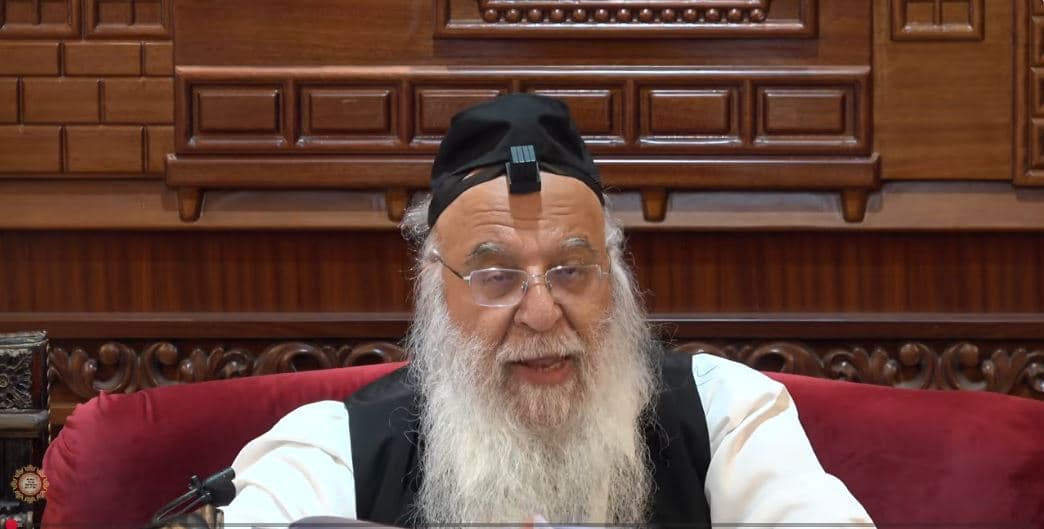
Rabbi Shmueli

1. Lessons on Consecrated Funds: A Driver, a Sage, and a Future Dean

This level of extreme care and scrupulousness regarding money was impressed upon me early in my life.

When I was a young married scholar (avreich) studying at Porat Yosef Yeshiva, I served as a morning supervisor from 8:00 to 9:00 AM at the Talmud Torah of Rabbi Shlomo Cohen. Each morning, the school's car would drop off the young students. Riding along in that car was the venerable sage Chacham Ben-Zion Abba Shaul! As the children disembarked at the Talmud Torah, the Rabbi would continue in the car on his way to Porat Yosef Yeshiva, and I would join him for the ride.

One morning during our commute, Chacham Ben-Zion was conversing with the driver—a short Yemenite gentleman whose name escapes me, but who was an exceptionally pleasant person whom the Rabbi loved dearly. The driver often posed questions to the Rabbi, and on this occasion, he brought up a monetary matter.

The Rabbi asked him, "And what does the Rabbi say?"

The driver answered with simple sincerity: "I have never taken or touched money that isn't mine. Charity money—I have never touched it. Whatever isn't rightfully due to me, I do not touch."

I sat nearby listening, and Chacham Ben-Zion turned and looked straight at me. As a young scholar at the time, I truly did not understand what the Rabbi was trying to convey. I thought to myself: What does this mean? Did I take something, or did that person take something? Who takes money that isn't theirs?

Reading my confusion, Chacham Ben-Zion explained: "He is speaking of consecrated funds (Hekdesh)! The money of Hekdesh is in my hands. Charity money passes through my hands, yet I refrain from taking anything that isn't due to me."

Even then, the full depth of his words did not immediately sink in. Chacham Ben-Zion had intentionally played that conversation to my ears for the sake of my future. Years later, when I assumed my responsibilities here as Rosh Yeshiva (Dean), vast amounts of institutional and charity money began passing through my hands. In such a role, expenses constantly arise—paying for electricity, water, and operating costs. The subtle temptation always exists to rationalize: "Listen, money is also owed to me; I'll just take a little from the Yeshiva's funds."

Only then did I finally realize what the Rabbi was telling me! It was a test! When public charity funds pass through your hands, it is a profound spiritual test. Look at the extraordinary care and foresight the Dean demonstrated, using that brief moment to teach me how careful a person must be with money.

2. Sensitivity to Property and Human Dignity

This commitment to honesty extends to the smallest boundaries of another person's property and feelings.

Rabbi Shteinman once spoke to a rabbi who was traveling abroad to a distant place. He asked him, "While you are traveling, will you pass near such-and-such a place?"

The rabbi responded that he would.

Rabbi Shteinman then requested: "Please, pass by a specific house, on a specific street, at a specific house number, belonging to a specific family. Once, long ago, I passed near their house, and unintentionally, a flower caught on my clothes and detached from their tree. To this day, I do not know what to do. Please ask their forgiveness on my behalf for that flower that fell because of my clothes."

Consider also the great rabbi in the ghetto during the Holocaust who, for several years, refused to sit on a chair. His reason? He feared that the chairs belonged to people whose possessions had been stolen or confiscated from them. He felt it was deeply degrading for a person to sit in a place where stolen property was involved.

This conscientiousness applies not only to tangible property, but to human sensitivity as well. Rabbi Eliyahu Lopian was known to attend bar mitzvah celebrations on Shabbat, stay for a minute or two during Kiddush, and then depart. On one occasion, however, he stayed continuously while the guests were already leaving.

Once everyone was ready to leave, he asked for the lady of the house and called her over. He said to her: "Look, mazel tov to you, and I ask your forgiveness. My hand shook, and when I made Kiddush, the wine spilled on the tablecloth. I soiled the clean, beautiful tablecloth you prepared in honor of your guests, right during Kiddush, so I wanted to stay and ask for your forgiveness."

3. The Weight of an Unpaid Coin

Yet, people do not always learn the proper caution regarding monetary matters from such examples.

Rabbi Ben-Zion Feldman related that the Chazon Ish always spoke to him about a certain person from whom he had once borrowed a single prutah (a small coin of minimal value). The Chazon Ish would constantly express anguish, saying, "I haven't returned that prutah to him," though he did not even know who the person was.

When the Chazon Ish passed away and a massive crowd gathered for the funeral, a secular bystander came by and asked what had happened. Upon hearing that the Chazon Ish had passed away, the man suddenly realized the connection: he was owed a prutah, as the Rabbi had once borrowed a prutah from him.

As soon as Rabbi Ben-Zion Feldman heard this, he stepped forward and returned the prutah to the man. Reflecting on this, he remarked: "See how the Rabbi constantly remembered that he owed someone a prutah and worried about it continuously." Where are we compared to that level of honesty?

A similar story is told of the Chafetz Chaim after he got married and ran a grocery store to make a living. A gentile woman came in to buy salted fish, completed the purchase, but walked out and forgot to take her fish.

When the Chafetz Chaim saw this, he did not know who she was, but he immediately ran after her to trace where she went. He discovered that she lived in a completely different neighborhood. To make sure no dishonest gain remained in his possession, he took his own coins, bought salted fish, and distributed it throughout her entire neighborhood. He refused to benefit from or use money that was not entirely clear of any unjust gain.

4. Heavenly Accounting Beyond This World

Here in Jerusalem, a tragic event illustrated how strictly monetary obligations are recorded in Heaven. On Wednesday night, the 22nd of Av 5763, a terror attack occurred on the No. 2 bus line (Kav-2) when a suicide bomber blew himself up, taking the lives of 22 people. Among those killed was the dedicated educator Rabbi Chanoch Segal, who lived on Chazon Ish Street in Bnei Brak.

Prior to a subsequent month of Av, Rabbi Segal appeared in a dream to one of his family members. In the dream, he was standing next to the bookcase in his home, holding a note written in large, clear letters bearing the number "Five."

Rabbi Segal explained in the dream that this "five" referred to five Israeli pounds, which was equivalent to 14 shekels in contemporary currency, and that this debt was owed to someone named Wein.

The family members awoke from their sleep, waited until morning light, and quickly traveled with the Rabbanit to make a connection. They recounted the dream and set out to find who "Wein" might be, but their initial efforts were unsuccessful.

Recalling the dream's detail that it was originally five Israeli pounds—an old currency—they realized it might not be a current neighbor, but an old-timer from years past. Following up on their inquiries, they eventually arrived at a synagogue of Slovakian immigrants. There, they identified an individual from whom Rabbi Segal had indeed borrowed five Israeli pounds full 24 years earlier, which he now wished for them to return.