
An Eternal Light - Key Details about the life and wonders of Rabbi Mordechai Sharabi - may his merit protect us - amen
In the year 5708 (1948), when the Beit El Yeshivah in the Old City was destroyed, our Rabbi may his merit protect us, amen, feared that the sacred minyan of Kabbalists who prayed all three daily prayers with the mystical intentions (Kavanot) would cease to exist. He immediately undertook to establish a new minyan of kabbalists, most of whom had been among the Kabbalists of Beit El, who continued the illustrious chain of Kabbalistic tradition and prayer with Kavanot.
⚠️An Eternal Light In honor of Rabbi Mordechai Sharabi, (Zya"a)
The Birth of Our Holy Rabbi, (Zya”a) (translated from an article on our Hebrew internet site)
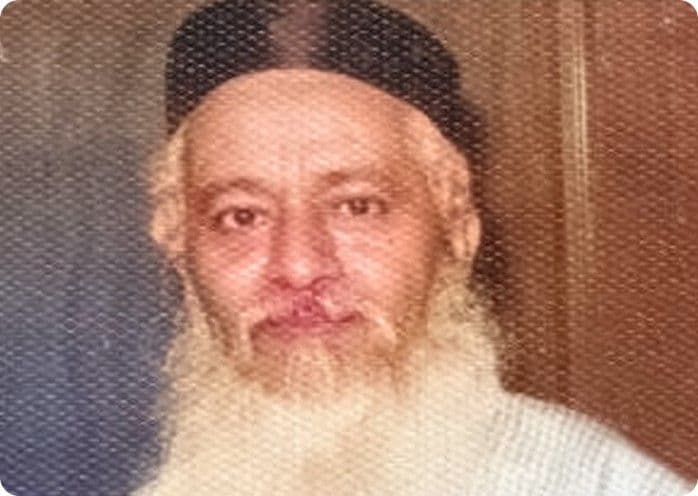
In the year 5672 (Jewish calendar), the sun rose in the city of Sharab in Yemen. With the birth of our Rabbi to his father, Rabbi Yehuda, he was named Mordechai. Here began the extraordinary life of our Rabbi, filled with devotion to Hashem and dedication to Torah study, which illuminated the world with his wisdom and teaching.
Our Rabbi’s father passed away even before his birth. Two years later, when he was still a very young child, his mother also passed away, on the seventh day of Passover. Our Rabbi and his sister were then raised in their grandfather’s home, where they absorbed a special fear of Heaven, holiness, and piety.
To Learn and To Teach
Even in his early years, our Rabbi absorbed Torah and holiness from his holy grandfather, Rabbi Yefet Abraham Tazi, (ZTvK"L). In addition to this, he was blessed from Heaven to study under the holy and pious Kabbalist and recluse, Rabbi Chaim Sinwani, (ZTvK"L). He learned Torah from his mouth for two full years, through which he rose and elevated himself, becoming like a mighty tree.
When he was still very young, at only eight years old, the sages of Yemen appointed our Rabbi as a teacher, called ‘Mari,’ and he would teach Torah to groups of students. All the sages of his city recognized him, for his hands were mighty in Torah and its paths.
Our Rabbi taught the Babylonian Talmud in the Talmud Torah in Yemen, and his students numbered around one hundred. He transmitted the learning to them with clarity of speech, wisdom, and good taste, and the students drank in his words eagerly. In his later years, our Rabbi expressed that his students were older than him in age, around sixteen or seventeen, yet because he was younger, they would come in crowds to hear Torah from his mouth.
In one of his lessons, our Rabbi recounted that during his Bar Mitzvah sermon, he delivered before the sages of his city orally all seventy types of Terafot (Kashrut deficiencies) that can apply to animals, providing a fluent explanation of each. He cited the halacha from the Rambam, supplemented by the Talmud and later legal authorities, and he was also tested on all the laws of Terafot and received certification from the leading sages of Yemen.
When our Rabbi reached the age of fifteen, he underwent a public examination before all the sages of Sharab on the entire Shulchan Aruch and the Mishneh Torah, and he was ordained as a rabbi by the scholars.
All the Torah by Heart
His special knowledge of Torah was the result of his diligence. As he taught his students, he would first prepare the lesson sixty times before studying with his teacher, and after the lesson, he would review it another sixty times. Thus, each lesson was memorized about one hundred and twenty times, engraving the Torah deeply into his being. His students attest that our Rabbi knew all four sections of the Shulchan Aruch, the Beit Yosef, and all their related topics entirely by heart.
When studying in the Yeshiva of the Kabbalists, our Rabbi would study the words of the Tur and Beit Yosef without a book before him. If someone reading aloud made a mistake, our Rabbi would immediately correct him.
His Marriage
When our Rabbi reached the stage in life of taking a wife, he married the Rebbetzin Leah (A"H). This match was proposed to him while he was traveling from the city of Aden to the city of Shar'ab. The purpose of his journey was to marry one of the daughters of Shar'ab. However, when he arrived at the village of Atzwiḥa, a match was suggested to him from one of the distinguished families of the village — Miss Leah, the daughter of the kabbalist Rabbi Zechariah ben Saadia Modḥi (ZTvK"L).
Our Rabbi immediately agreed to the match, and a short time after the proposal was made, he was married.
At that time, the Rebbetzin was only nine years old. She too was orphaned from her mother, who had passed away during childbirth. She was given the name Leah in Israel after her mother, who bore the same name.
Thus, was established the remarkable home whose light warmed the hearts of tens of thousands among the Jewish people, and from which the light of Torah spread to thousands upon thousands.
His Aliya to the Land of Israel
Our Rabbi’s longing and love for the Land of Israel were exceedingly great. Throughout all his days, he prayed fervently that Hashem would merit him to ascend and grace himself with the dust of the Holy Land. And with Heavenly assistance, his wish was fulfilled, and immediately after his marriage, in the year 5692 (1932), our holy Rabbi ascended together with the Rebbetzin (A"H) to the Holy Land.
The authorities in Yemen had imposed an absolute prohibition against Jews leaving the borders of the country. Therefore, in order that the residents of the city would not notice them, they were forced to leave behind their home and possessions in Yemen, even leaving the lights burning in their house. The Rabbi and Rebbetzin traveled in a caravan to the Land of Israel together with Rabbi Shmuel Haddad (z"l) and his family, who was among the close friends of our Rabbi.
Upon arriving in the Land, our Rabbi descended from the ship with immense emotion and kissed the soil of the Holy Land, for which he had so deeply yearned to grace its dust. He merited to dwell in the land upon which “the eyes of Hashem your L-rd are always set.”
Plantings in the Upper Realm
Upon arriving at the port of Jaffa, the immigrants were transferred to the city of Rehovot, where they were required to work in the orchards in exchange for their sustenance. Officials also came to the home of our Rabbi and informed him that the next day he would be required to plant at least ten saplings.
Our Rabbi, however, continued in his usual manner, immersing himself in Torah study with great diligence and enthusiasm, paying no attention to worldly matters such as planting. Toward evening, the supervisor came to the Rabbi’s home and firmly questioned him about his avoidance of the planting work assigned to all the residents.
Our Rabbi smiled and replied: “I planted ten saplings in the upper realm.” By this, he meant that through his deep involvement in the mystical teachings of the Torah, he had unified the ten supernal sefirot and planted precious spiritual plantings there.
The supervisor, not understanding the Rabbi’s meaning, thought he was insane, and immediately exempted him from the labor. Thus, even during the short period he remained in the city of Rehovot, our Rabbi was able to continue devoting himself to Torah study in his holy manner.
After a few days, our Rabbi resolved in his heart to ascend to Jerusalem, the Holy City, knowing that it was there that his true place belonged. And so, he did: together with his wife, he loaded their belongings onto the train and traveled to Jerusalem.
Upon arriving in Jerusalem, the Holy City, our Rabbi wandered back and forth several times until he reached the holy courtyard — the courtyard of his yeshivah — on Shilo Street in the Machane Yehuda neighborhood, where he established his residence.
In the Beit El Yeshivah
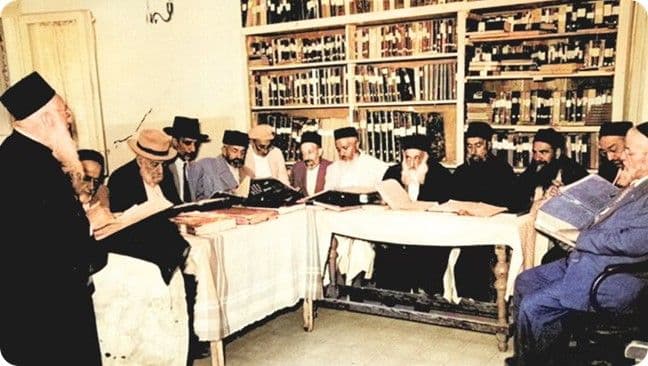
Our Rabbi’s deepest longing and desire was to merit sitting in the presence of the great kabbalists of the Beit El Yeshivah in the Old City, who faithfully transmitted the sacred tradition from generation to generation, tracing back to our master the Rashash may his merit protect us, amen.
Our Rabbi felt that Heaven had assisted him greatly in meriting to dwell in Jerusalem. Every day after the morning prayers, he would make his way on foot to the Beit Midrash of the holy congregation of the pious of “Beit El,” where he studied under the renowned kabbalist and leader of the pious, Rabbi Shalom Hedaya (ZTvK"L).
In addition, our Rabbi joined the Yeshivah “Rehovot HaNahar,” headed by the saintly kabbalist Chacham Shaul Dweck HaKohen (ZTvK"L), known as “the Sadeh,” and he attended upon him devotedly. After the passing of the Sadeh in the year 5693 (1933), our Rabbi continued studying with the kabbalists in the Magen David Synagogue, where the Sadeh’s son, Rabbi Eliyahu Dweck, served, until the year 5700 (1940), at the outbreak of the Second World War.
He also studied in the Yeshivah “Emet LeYaakov,” where he attended the lectures of the righteous kabbalist Rabbi Yaakov Lopes (ZTvK"L).
The Founding of Yeshivat Nahar Shalom
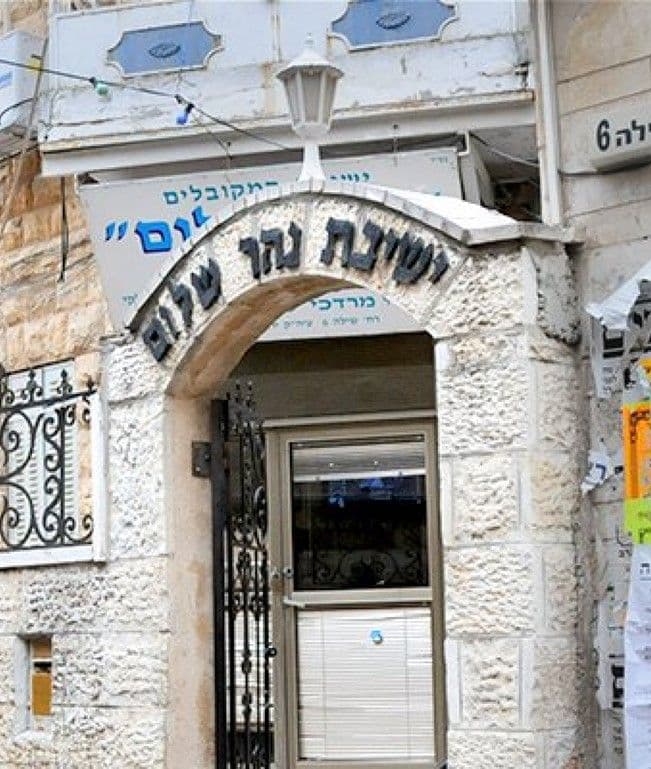
In the year 5708 (1948), when the Beit El Yeshivah in the Old City was destroyed, our Rabbi may his merit protect us, amen, feared that the sacred minyan of Kabbalists who prayed all three daily prayers with the mystical intentions (Kavanot) would cease to exist. He immediately undertook to establish a new minyan of kabbalists, most of whom had been among the Kabbalists of Beit El, who continued the illustrious chain of Kabbalistic tradition and prayer with Kavanot.
Thus, more than seventy years ago, our Rabbi founded his yeshivah, the Yeshivah of the Kabbalists “Nahar Shalom,” together with his colleague, the Kabbalist Rabbi Avraham HaKohen, who had also been among those who prayed with Kavanot in the Beit El Yeshivah of the Old City. He would travel tirelessly from place to place in order to sustain the great yeshivah, “Nahar Shalom.”
Our teacher named the yeshivah after the saintly kabbalist Rabbeinu Shalom Sharabi (Zya"a), renowned for his extraordinary holiness and profound attainments in the secrets of the Torah. It was not without reason that our revered Rosh HaYeshivah (ZT"L) chose to name the yeshivah after Rabbeinu the Rashash (Z"L), for his heart’s deepest aspiration was to raise students who would know how to pray from the siddur of Kavanot arranged by the Rashash (Zya"a), according to the sacred tradition faithfully transmitted from generation to generation through the Beit El Yeshivah. Indeed, the entire essence of the yeshivah was a continuation of Beit El itself.
Already at midnight, our revered teacher (ZT"L) and his students would rise and immerse themselves in the study of the hidden Torah until the time for prayer. When the time for prayer arrived, they would prepare themselves with awe and love, standing to pray with deep seriousness at sunrise, using the prayer book arranged by the holy Rashash (ZLH"H). After the prayers, our Rabbi (ZT"L) would study daily with his students the Tur together with the Beit Yosef and the Rambam.
Indeed, after immense effort and toil, our revered Rosh HaYeshivah (ZTvK"L) merited to establish many students in the study of the wisdom of Kabbalah in general, and especially in the Kavanot of the Rashash. It is possible that were it not for our teacher (ZT"L), this sacred tradition of study and prayer with Kavanot might have been forgotten altogether.
His Holy Torah Lectures
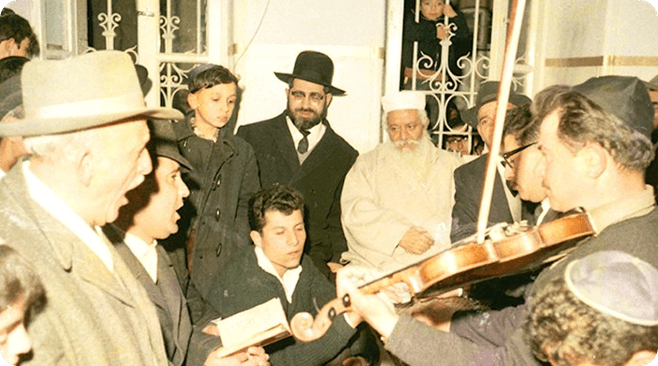
Our Rabbi’s day was filled to the brim with sacred Torah lectures. Beginning even before the morning prayers with his Kabbalist disciples, and continuing afterward with many classes in all areas of Torah study, people of every type and background would gather to hear his pure words and enlightening teachings.
Our Rabbi constantly encouraged working men and householders to be steadfast in establishing fixed times for Torah study. In particular, he emphasized to them that they should not miss even a single day of their established learning schedule, for “If you forsake Me for one day, I will forsake you for two.” He would often say that even someone who was prevented from arriving at the beginning of the class should still make every effort to come in the middle of the lecture — and even if only for the end of the class, he should still come.
He would add that even if a person arrived only when the congregation was reciting “Rabbi Chananiah ben Akashia…,” this too was valuable and beneficial, for diligence and consistency in Torah study are of exceedingly great importance.
His Life Story and Wonders
During one of his Mussar lectures from the holy book Reishit Chochmah, our Rabbi related that he once saw in a dream the exalted philanthropist, the righteous kabbalist Rabbi Nissim Nachum (ZTvK"L), holding a staff in his hand.
Our Rabbi asked him: “What is this staff that you are holding?”
He replied: “This is the staff of King Mashiach, and at the time of the redemption I was granted the merit of placing this staff into his hand.”
Our Rabbi then asked him: “For what reason did you merit such a privilege?”
He answered: “Because through my deeds during my lifetime, I merited to greatly hasten the redemption — through increasing the study of Kabbalah, and through generously supporting all those who came to study Kabbalah under the elder kabbalist of the previous generation, the renowned Rabbi Shaul Dweck HaKohen (ZTvK"L). I also established his yeshivah, ‘Rechovot HaNahar,’ which stood gloriously in the Bukharim neighborhood, attracting many sages. In addition, I ensured that the students received generous monthly support. Through this merit, great rabbis emerged from this yeshivah, both in revealed Torah and in Kabbalah, and they became the leading Kabbalists of the previous generation.”
Regarding this, our revered teacher and crown, the saintly kabbalist Rabbi Benayahu Shmueli shlit"a, explained why our Rabbi (Zya"a) merited to be shown this vision in his dream: because just as Rabbi Nissim acted, so too did he. Through establishing Yeshivat Nahar Shalom in order to continue the sacred chain of Kabbalah and prayer with Kavanot, and through teaching Torah publicly for many years and raising a generation trained in these holy intentions, certainly through his efforts the redemption was drawn ever closer and closer…
The Rabbi of the Collective of Israel
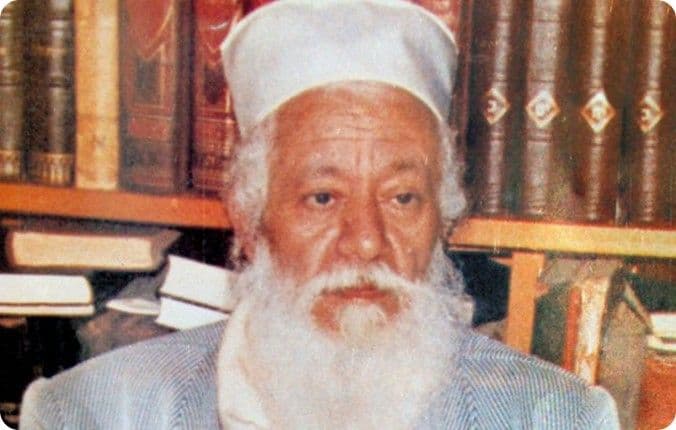
Our Rabbi (Zya"a) was exceedingly careful to conceal the full extent of his greatness and holiness, and he resisted publicity with all his strength. Only a select few who merited to participate in his classes knew of his extraordinary sanctity, his wondrous conduct, and that he was associated with miracles and wonders.
In the year 5728 (1968), our Rabbi suffered a severe heart attack and was hospitalized in the old Shaarei Tzedek Hospital. Later, our Rabbi related that during his stay in the hospital, it was revealed to him from Heaven that he had completed his spiritual mission in this world. However, if he wished to continue living, he would need to bring merit to the public by receiving people for healing, blessing, and salvation. Our Rabbi (Zya"a) agreed to this, and after some time he emerged from danger and regained his strength.
From then onward, our Rabbi became widely known among all the people and became a spiritual leader for the Collective of Israel. Tens of people would seek his counsel every day. Our Rabbi (Zya"a), whose heart was compassionate and tender, would share in the pain of those who came to him, often weeping over their suffering, and blessing them with salvation and success.
If someone faced a serious illness or particular hardship, he would perform for them a Tikkun Avonot according to the tradition of Rabbeinu the Rashash, or a Pidyon Nefesh. The money he received for these spiritual services he would distribute to the yeshivah and its students, and many were helped through his prayers.
He also guided all people regarding the observance of Shabbat, kashrut, and family purity, and through his influence many returned from wrongdoing.
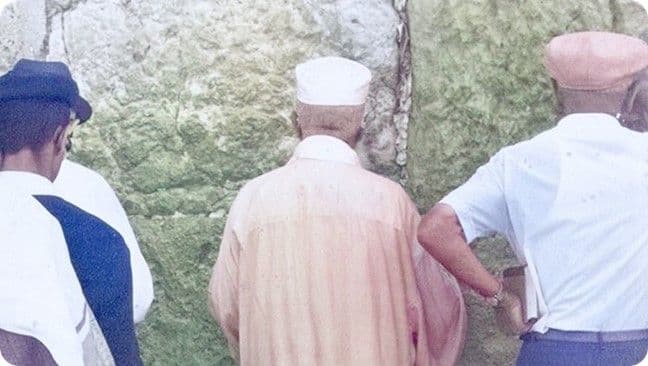
“And in the Seventh Year He Shall Go Free…”
Our Rabbi (Zya"a) sanctified himself through undertaking what is known as “Teshuvat HaKaneh” — namely, fasting continuously over a period of six consecutive years. Through this, he merited the level alluded to in the verse, “And in the seventh year he shall go free without payment,” meaning free from the evil inclination, over which the Yetzer Hara no longer held sway.
Through the power of his holiness and righteousness, and through his profound attachment to the holy Torah, our Rabbi (Zya"a) could perceive matters at astonishing distances and knew future events with remarkable clarity. As our Sages said: “Who is wise? One who sees what is yet to be born.” Whoever sought his counsel was as one consulting the Urim VeTumim — every answer was engraved like stone, astonishingly precise.
The spirit of Divine inspiration pulsed within him, and he was able to reveal hidden matters and deep mysteries concealed from the eyes of ordinary people.
Continuing the Holy Chain
The Yeshiva of the Kabbalists in its glory
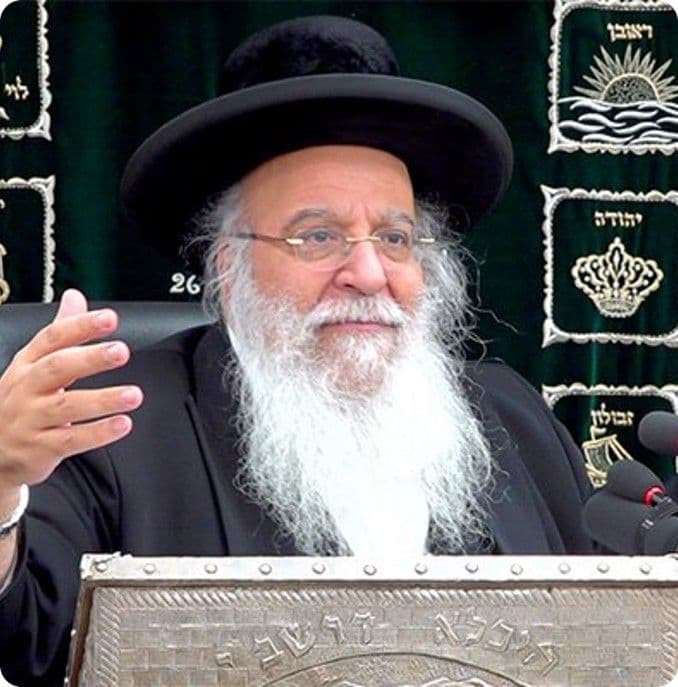
Already during his lifetime, our Rabbi (Zya"a) appointed his beloved disciple — the saintly and exalted kabbalist, the holy and separated sage, the Rosh HaYeshivah shlit"a — to stand at the head of the yeshivah and to serve as the prayer leader for the prayers with Kavanot in the holy yeshivah. For it is well known that in the Beit El Yeshivah of the Rashash (Zya"a), the custom was that the Rosh HaYeshivah, known as “the Rav HaChassid,” would lead the prayers of the Kavanot.
The will and aspirations of our Rabbi (ZTvK"L) continue to be fulfilled and realized. The holy yeshivah that he founded continues in his path with ever-growing strength and vigor — expanding the ranks of students and sages of Kabbalah, spreading the teachings of the Zohar and Kabbalah throughout the world, and bringing merit to the public by drawing distant souls closer.
It is often repeated by our revered master, the rabbinic genius and kabbalist, Rabbi Benayahu Shmueli shlit"a, that all the accomplishments of the yeshivah for the sake of the Jewish people — whether in spreading Torah and Kabbalah to thousands and tens of thousands, or in outreach, acts of kindness, and bringing merit to the public — are all in the merit of the pure prayers of our revered teacher in Heaven, who stands praying on high and watches over the holy yeshivah with an ever-watchful eye.
As is well known, even today the daily lessons in Kabbalah delivered in our Rabbi’s yeshivah, “Nahar Shalom,” by the leading sages among the Kabbalists, are profound foundational teachings for understanding this wondrous wisdom. It is therefore no surprise that these lectures attract scholars, rabbis, Roshei Yeshivah, and great Torah authorities from all corners of Jerusalem, the Holy City.
The worldwide Zohar lecture delivered every Sunday by our revered teacher, shlit"a is broadcast through all satellite stations of the company “Dar VeSocheret” throughout the world. In this way, the entire Jewish people merit to receive the abundance of holiness and the fiery words of inspiration from the holy Zohar, composed by the saintly Tanna Rabbi Shimon bar Yochai (Zya"a).
The “Heichala DeRashbi” center for the dissemination of the Zohar, established by our revered teacher, shlit"a, distributes thousands of complete sets of the Zohar each year in various magnificent editions of exceptional beauty and splendor. In addition, the center distributes hundreds of thousands of booklets containing the Pitum Haketoret (the production of the incense) free of charge to the public, and much more.
The prayer books of Kavanot, which were the life’s aspiration of our master Rabbi Sharabi (Zya"a), have been newly edited and arranged with additional explanations and notes, printed in beautiful Ashurit script, in more than forty volumes.
The prayers using these siddurim of Kavanot are conducted in the yeshivah every single day without interruption. And with Heavenly assistance, from the time they were established by our Rabbi Mordechai Sharabi (Zya"a)until today, not a single prayer with the Kavanot of the Arizal and the Rashash (Zya"a) has ever been omitted.
Regarding this, the rabbinic genius, Rabbi Chaim Palagi (Zya"a) wrote that all the prayers of the Jewish people ascend to the Heavenly Chamber of Prayer through the prayers of the Kabbalists in Jerusalem, who pray with the Kavanot of the holy Arizal and the Rashash (ZLH"H).
It is therefore no wonder that this was the entire aspiration and labor of our Rabbi (Zya"a)— to establish a generation of Kabbalists who would pray with the Kavanot of the Arizal and the Rashash.
How much joy and spiritual delight our revered teacher (Zya"a) must have in the upper worlds as he sees his great students, the continuers of his path, raising yet more students who stand in prayer using the siddurim of Kavanot of the Arizal and the Rashash.
A double and multiplied joy comes to our Rabbi when he sees that the walls of the yeshivah can scarcely contain the great number of Kabbalists who gather during the High Holy Days and the festival of Sukkot from every corner of Jerusalem to pray in his holy yeshivah. So great is the attendance that the yeshivah was required to erect an enormous sukkah covering the entire holy courtyard of our Rabbi’s home, at a total cost exceeding 150,000 shekels.
Never before has such a phenomenon been heard of anywhere in the world: a single gathering containing nearly one hundred worshippers praying with the Kavanot for the lulav waving according to the Arizal and the Rashash — a service lasting for more than a full hour.
Continuing the Outreach Founded by Our Rabbi
Yeshivat HaMeyushar
The great spiritual center for baalei teshuvah, Yeshivat HaMeyushar, is named after our Rabbi, the saintly kabbalist Rabbi Mordechai Yehuda Yafet Sharabi (Zya"a). It was established after his passing by our revered teacher and master, the rabbinic genius and kabbalist Rabbi Benayahu Shmueli, shlit"a.
The yeshivah serves as a spiritual and Torah center for spreading the light of Torah in the city of Bat Yam and its surrounding areas. The Torah scholars of the yeshivah devote themselves diligently to Torah and Divine service — both in the study of revealed Torah and practical halachic instruction, as well as in the study of the hidden wisdom.
Every evening, the rabbis and scholars of the yeshivah go out to deliver lectures and strengthen the public throughout the city and surrounding regions.
Daily Torah classes for the entire public are held in the holy yeshivah in an atmosphere of unity, mutual love, and closeness of heart.
The yeshivah also includes a program for young men, designed to draw their hearts closer to their Father in Heaven and to teach them the path they should follow according to Torah and Jewish tradition.
The halachic guidance center connected to the yeshivah — established to provide assistance and answers in all Torah and halachic matters — greatly helps the residents of the entire region through daily telephone consultation and through the distribution of educational materials on the laws of family purity.
The charitable organization within the yeshivah distributes food and Shabbat necessities every Friday to the needy and struggling families.
At present, the yeshivah is establishing a mikveh for the benefit of the holy community. As is well known, immersion in a mikveh purifies a person and removes impurity and harmful spiritual influences. Through Torah study in purity, may Hashem hasten our redemption and the salvation of our souls speedily and in the near future. Amen.